

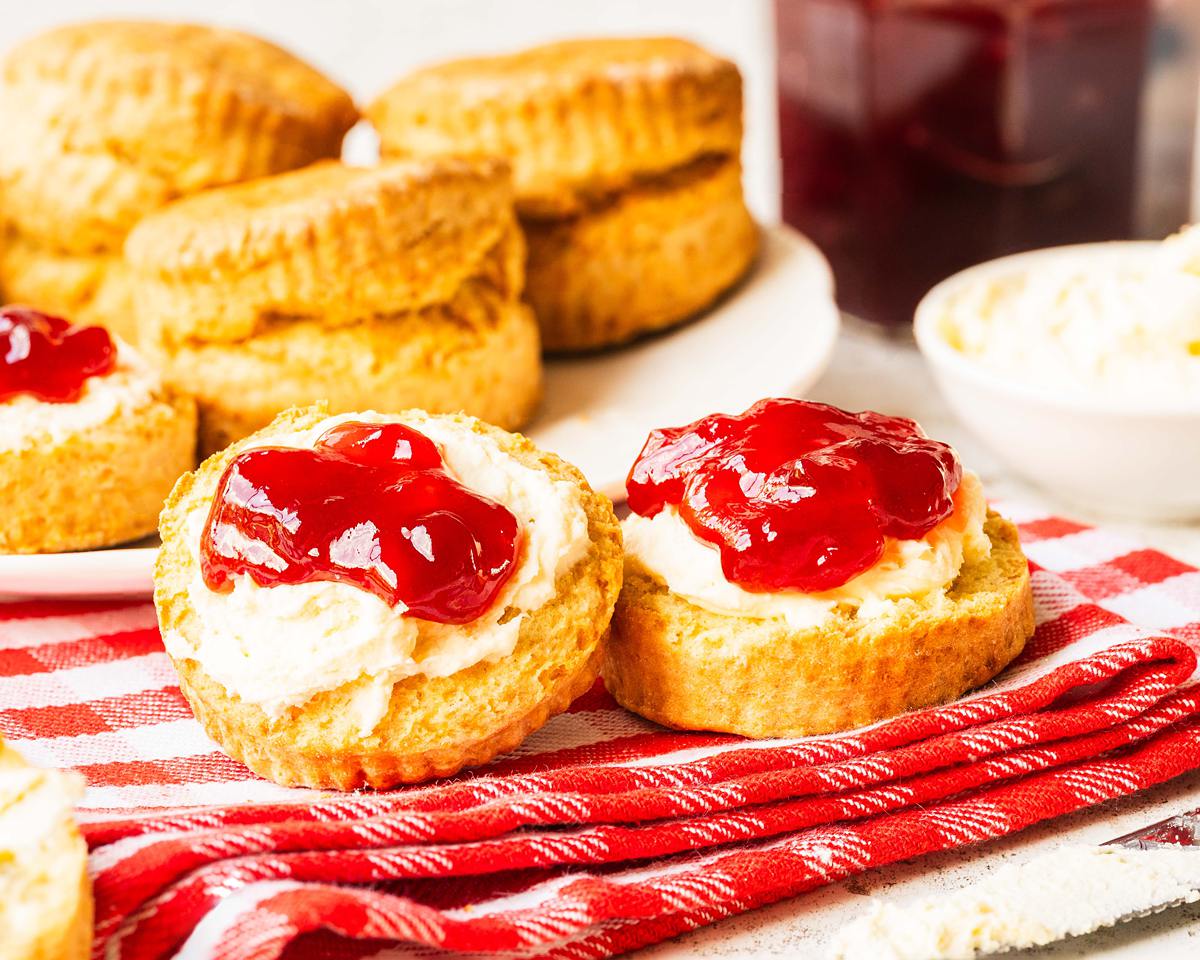
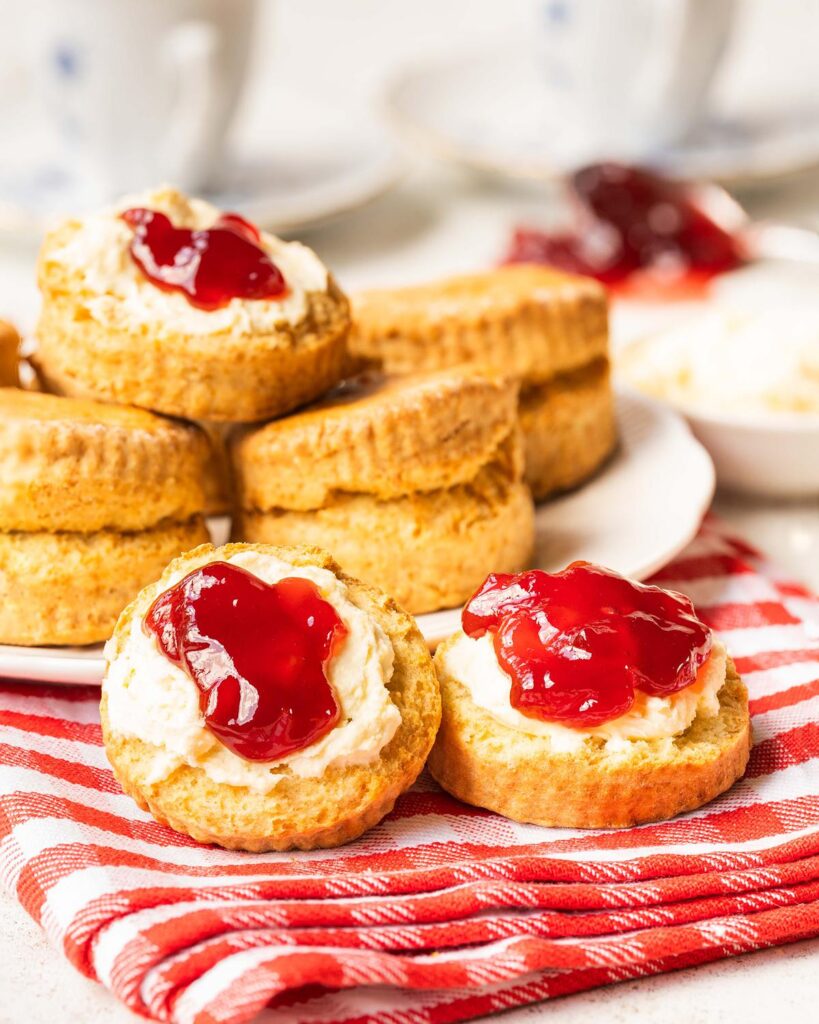
My buttermilk scones take the traditional British scones, a staple of the infamous afternoon cream tea, and gives them a fresh new indulgence! My version of this classic English bake uses buttermilk in place of milk for added richness, fluffy texture and delicate flavour. Plus they are so easy to make, you will be a pro in no time!
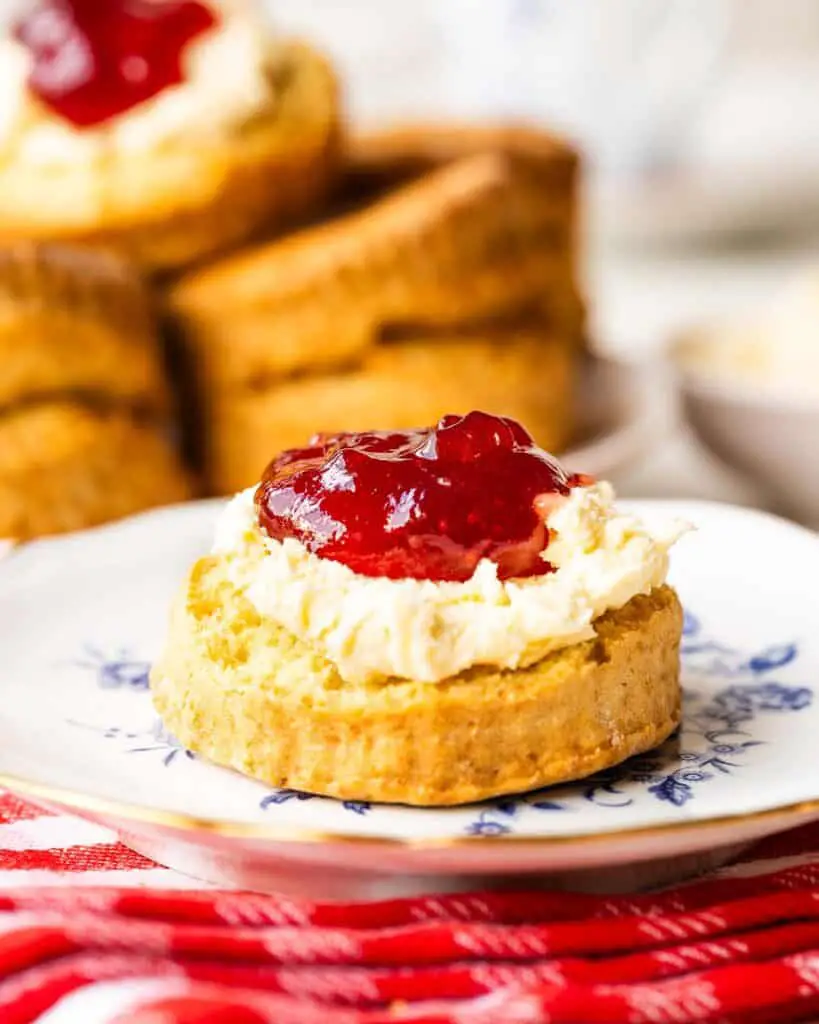
What are scones?
A bit about scones for you: scones are actually a type of bread known as a quick bread. Here in the UK, they are often slightly sweetened and traditionally served as an afternoon tea-time sweet treat with clotted cream and jam. I had not experienced the joy of this little beauty until my 20s, and have been totally obsessed with it ever since!
The difference between scones and biscuits
You would be forgiven for thinking the British scone and the American biscuit are one and the same. After all, they look very much the same and use majority of the same ingredients, but are enjoyed in different ways.
A scone is traditionally enjoyed as part of afternoon tea, served with clotted cream and jam alongside a steaming hot pot of tea. Biscuits meanwhile are presented in savoury cooking, as toppings to stews in much the same way we would dumplings here in the UK (though dumplings are nothing like US biscuits!).
In terms of making, there are a few key differences between the two:
- Scones are crisp on the outside with a tender middle, whereas biscuits are light and fluffy with flakey layers.
- Biscuits are presented as a savoury accompaniment, scones are almost exclusively served as a base for sweet toppings (though occasionally you will find them made savoury with cheese and herbs).
- You will find a traditional scones recipe without eggs, whereas biscuits use eggs in making the dough.
- Scones can be enjoyed warm fresh from the oven or cold when topped with cream and jam. Biscuits are never quite as good once cold, so will need to be enjoyed fresh or reheated before consuming.
Why use buttermilk in scones
A lot of recipes will use good ol’ milk to make scones. This works beautifully, and results in wonderful scones for sure! However, I found I prefer scones using buttermilk, as it makes for a much more tender bake, and so my recipe for scones using buttermilk was born!

What you’ll need for your buttermilk scones recipe
- Flour: I use plain flour for buttermilk scones recipe as I like to control the rise in this traditional bake.
- Baking powder/bicarbonate of soda: the raising agent used in this best buttermilk scones recipe.
- Salt: enhances the flavours in the bake. You will not taste it, I promise!
- Sugar: used for a little sweetness in the best recipe for scones with buttermilk.
- Butter: I use unsalted butter so I can control how much salt is in the bake. For best results, use cold butter cut into small chunks (or grated!) when making the dough and handle as little as possible.
- Buttermilk: I prefer to make my own buttermilk at home when making this foolproof scone recipe. My preferred method to make it is equal quantities of Greek yogurt and whole milk. If you do not have yogurt at home, you can easily make it by mixing milk and lemon juice too.
- Milk: used to brush the tops of the easy scones recipe with buttermilk before baking. This helps give them a beautiful golden brown colour once baked.
Recommended tools to make buttermilk scones
- Digital kitchen scales*: I always recommend using digital kitchen scales to weigh ingredients out over using a volume based measuring system, as cups. Weighing out the ingredients is much more accurate than measuring by volume, and will ensure better results in the cookies, so I would definitely take the plunge if you have not already.
- Measuring spoons*: for measuring smaller quantities such as tablespoons (tbsp) and teaspoons (tsp), a set of dedicated measuring spoons is a must! These are far more accurate than everyday eating spoons, and are really easy to get hold of too.
- Mixing bowl*: one bowl is all that is needed to make these delicious classic buttermilk scones!
- Cutters*: I have a set of dedicated cutters I use when making my buttermilk scones recipes. However, if you don’t you can easily use a glass too!
- Baking tray*: to bake the scones recipe buttermilk on.
- Pastry brush*: used to brush the milk over the fluffy buttermilk scones before baking.
How to make perfect buttermilk scones
Scones are actually really easy to make, and so moorish! Sift the dry ingredients into a large mixing bowl before rubbing in the cold butter. Once the mixture resembles breadcrumbs, gently stir in the buttermilk before tipping out to flatten and cut into rounds. Lightly brush with some milk before baking and try to resist scoffing the lot as soon as they’re out of the oven!
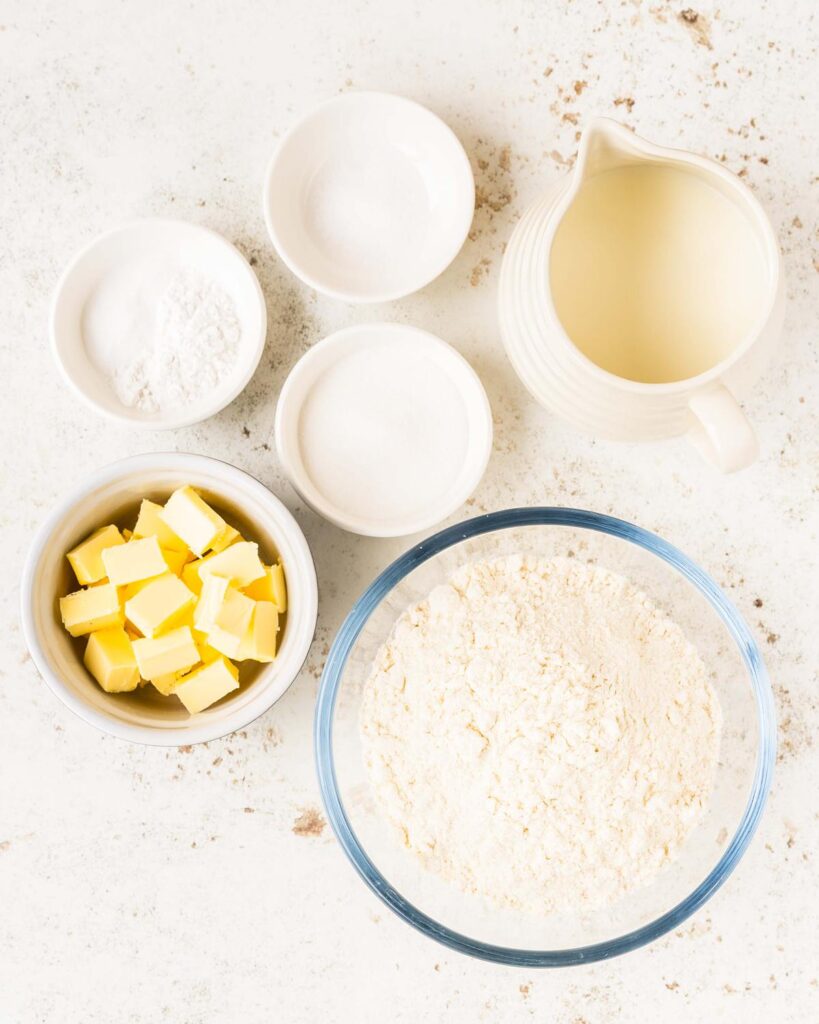
Step 1: Preheat the oven to 190C/375F. Line a baking tray with parchment paper and set aside.
Step 2: In a large bowl, sift together the flour, baking powder, bicarbonate of soda (baking soda), salt and sugar. Add in the cold cubed butter and rub in until the mixture resembles fine breadcrumbs.
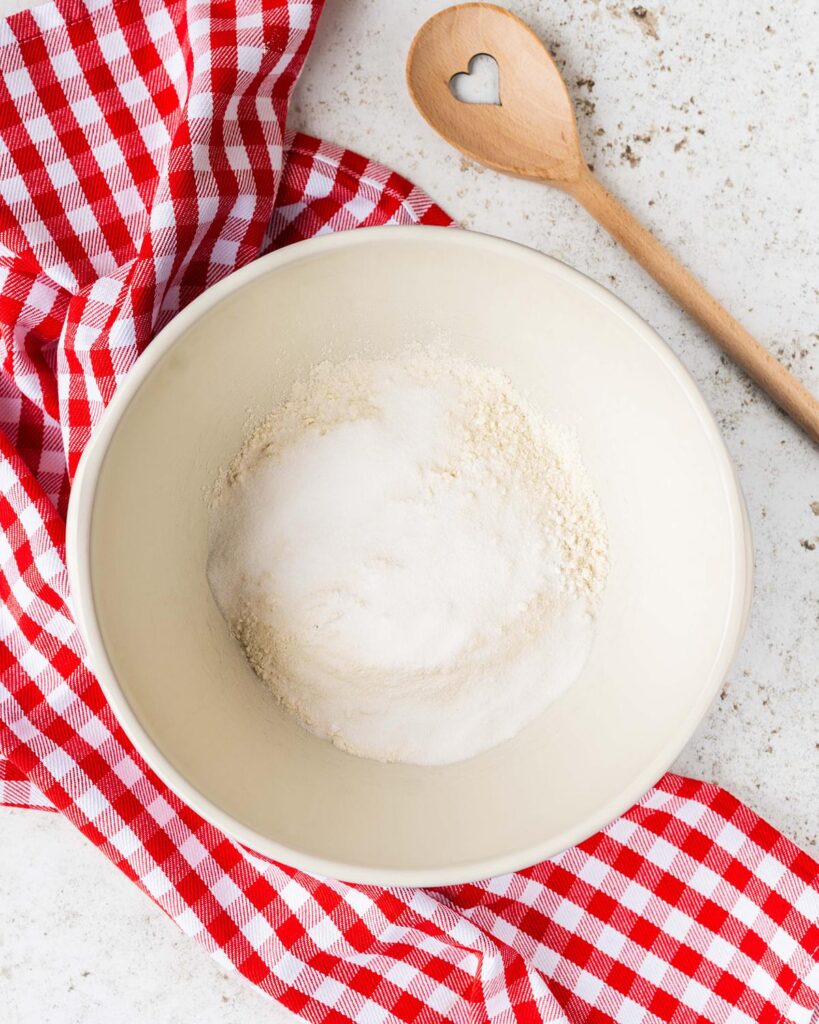
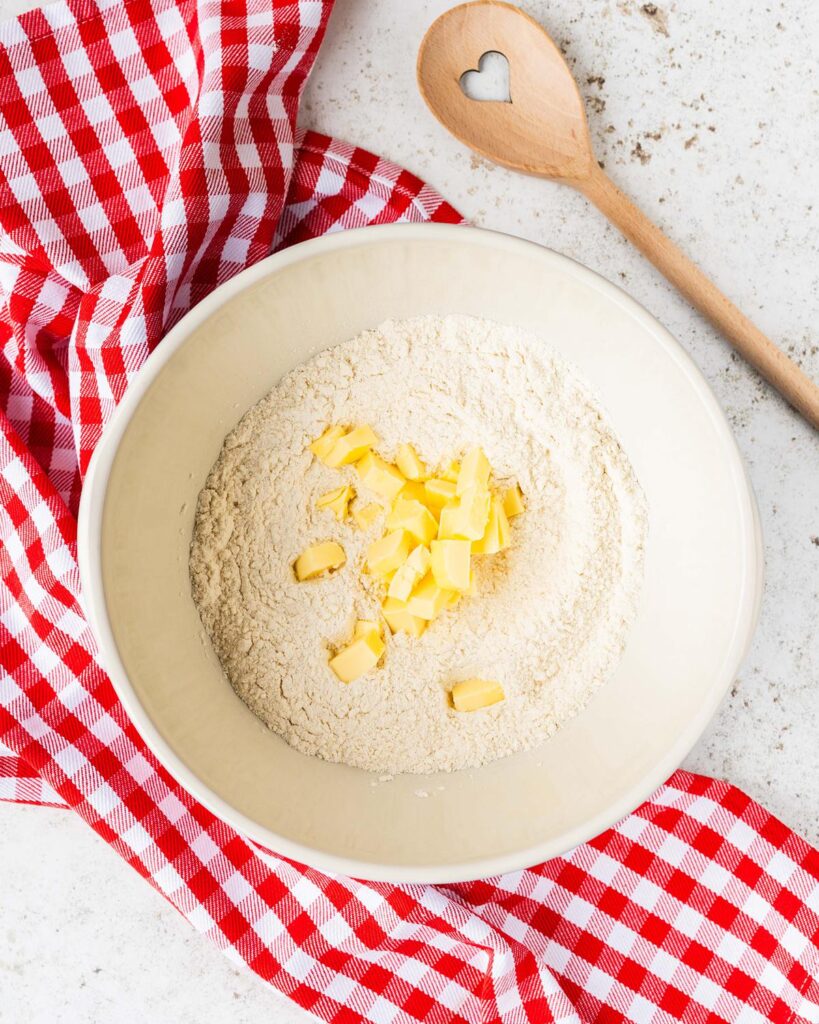
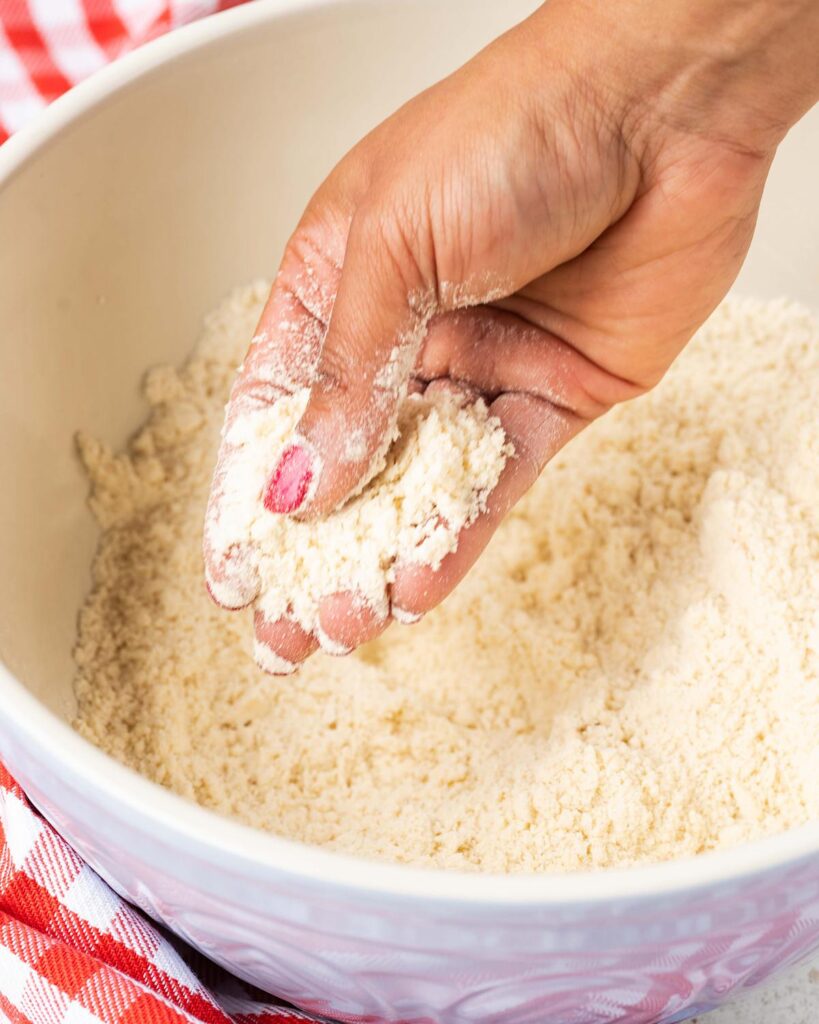
Step 3: Pour in the buttermilk and gently mix until the dough just comes together into a shaggy dough.
Step 4: Tip the dough out onto a lightly floured surface. DO NOT KNEAD! Instead, just push everything together into one large shape, then flatten with your hands until about an inch thick. Using a floured cutter tool, press it into the dough, stamping out as many shapes as you can. Squeeze the dough back together, then flatten again and repeat to use up the rest the dough.
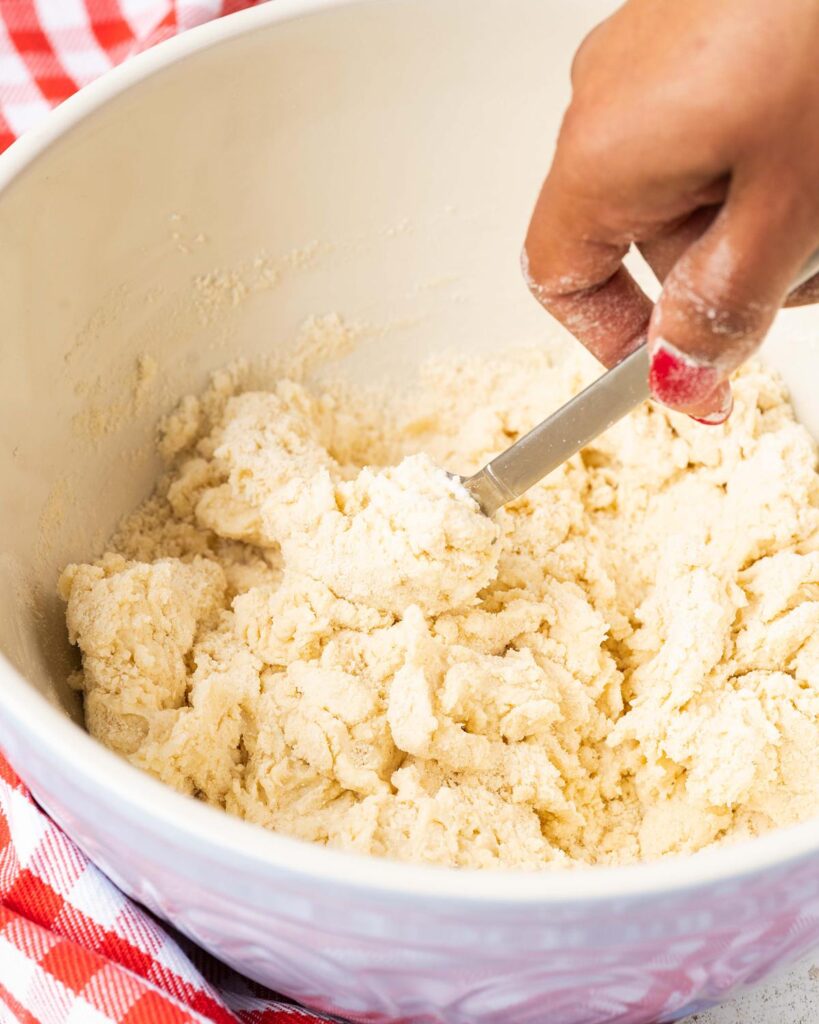
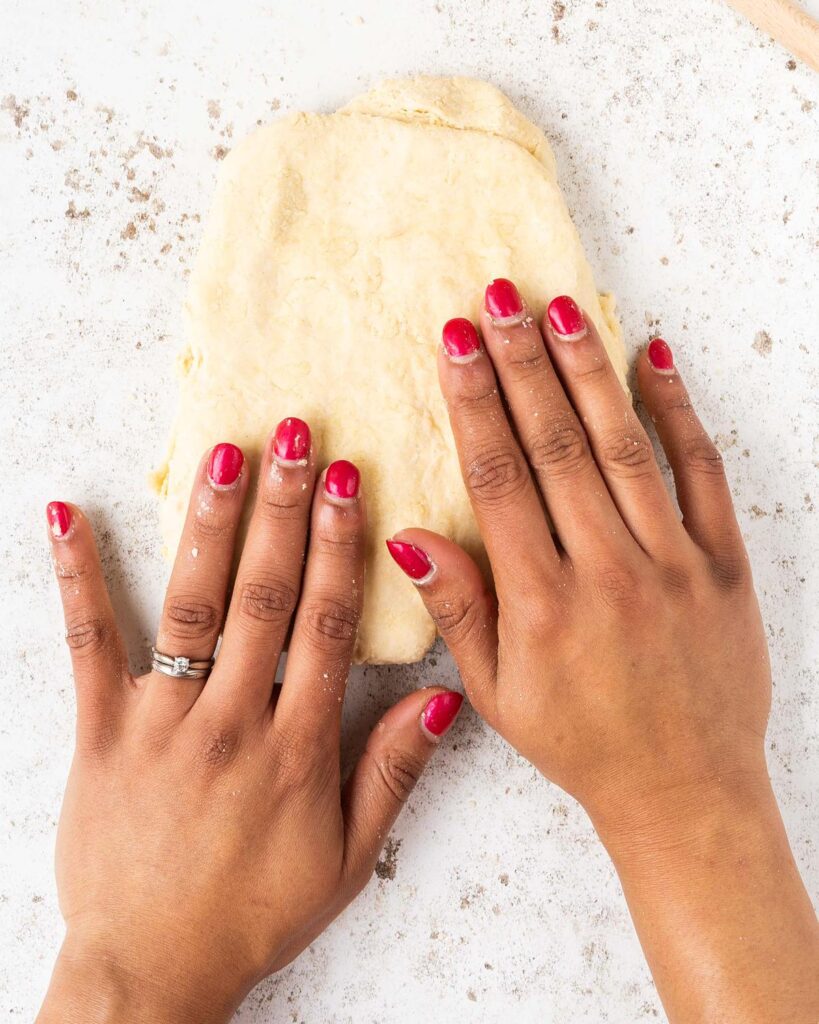
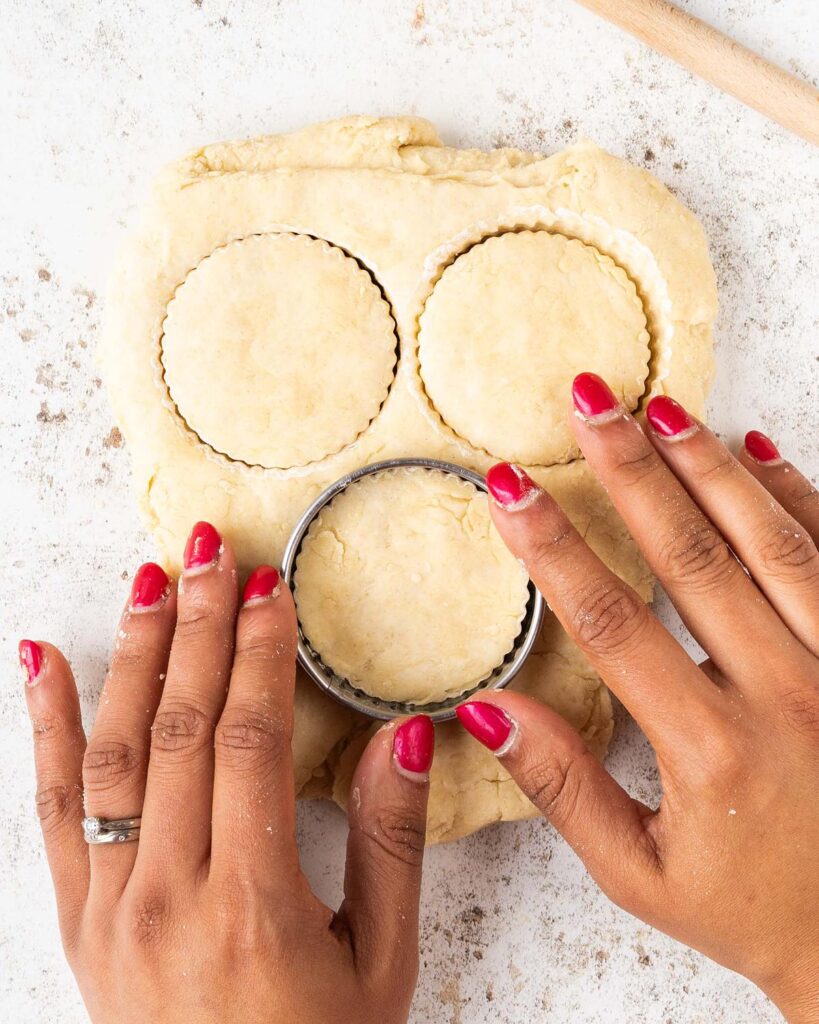
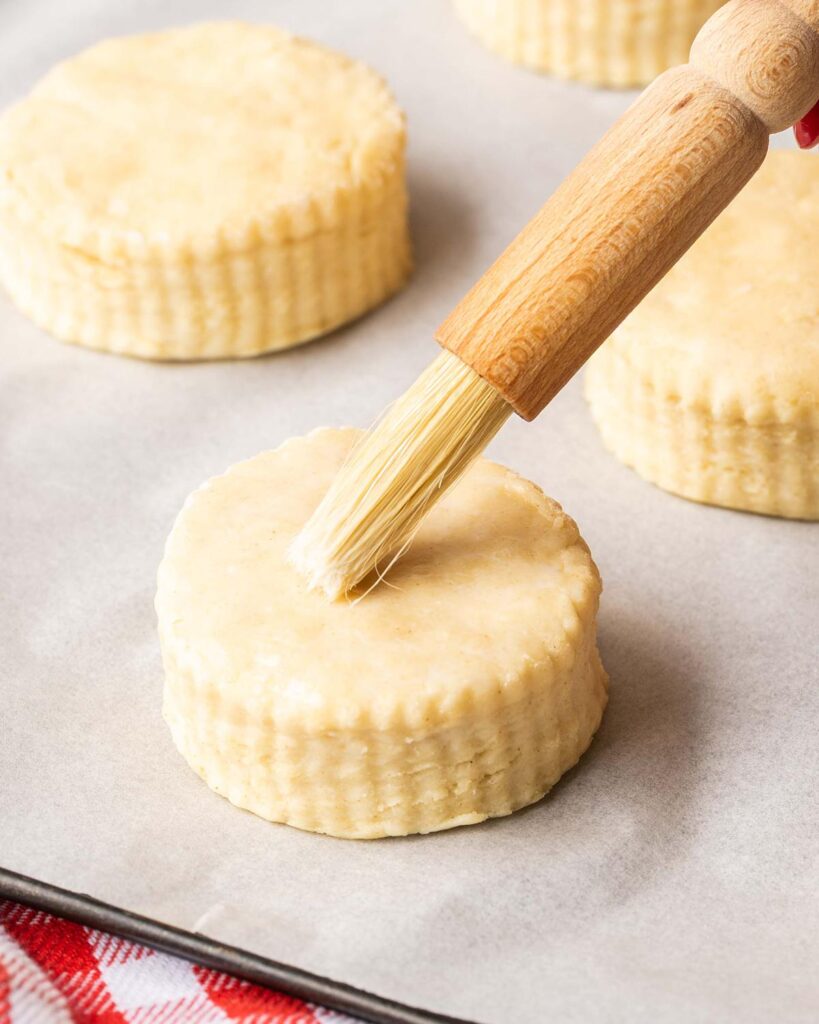
Step 5: Place the cut out scones onto the prepared baking tray, placing them fairly close together but not touching. Carefully brush the tops only of each scone with a little milk before baking.
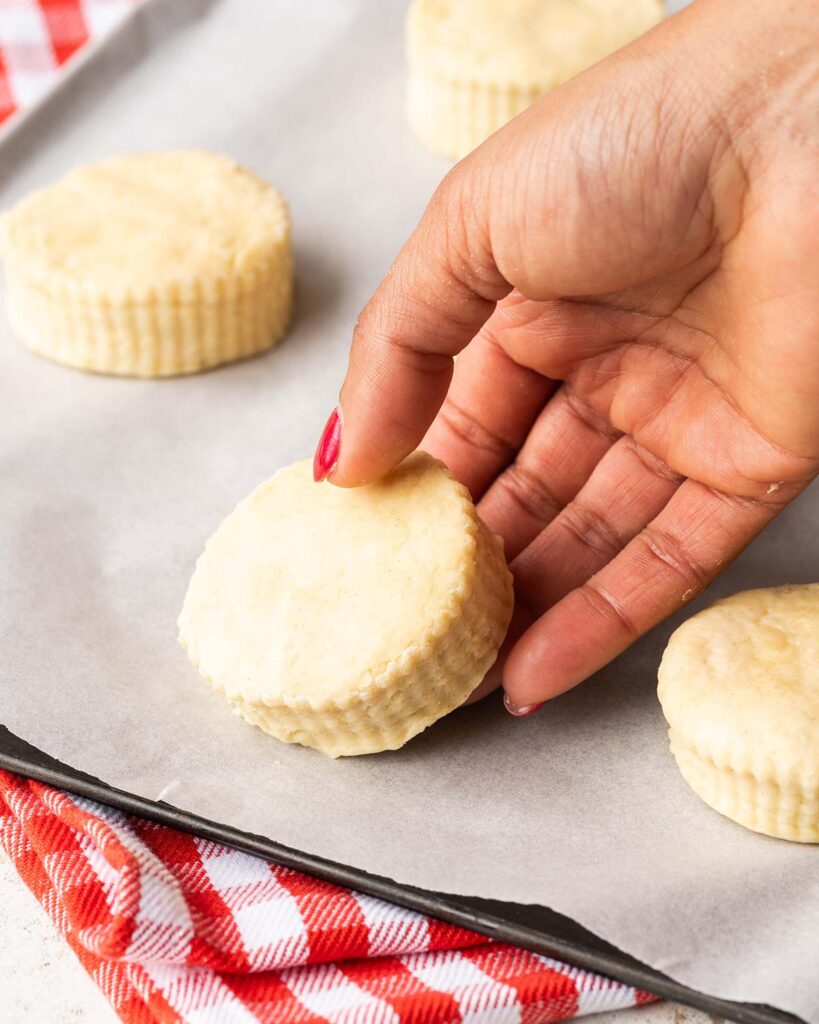
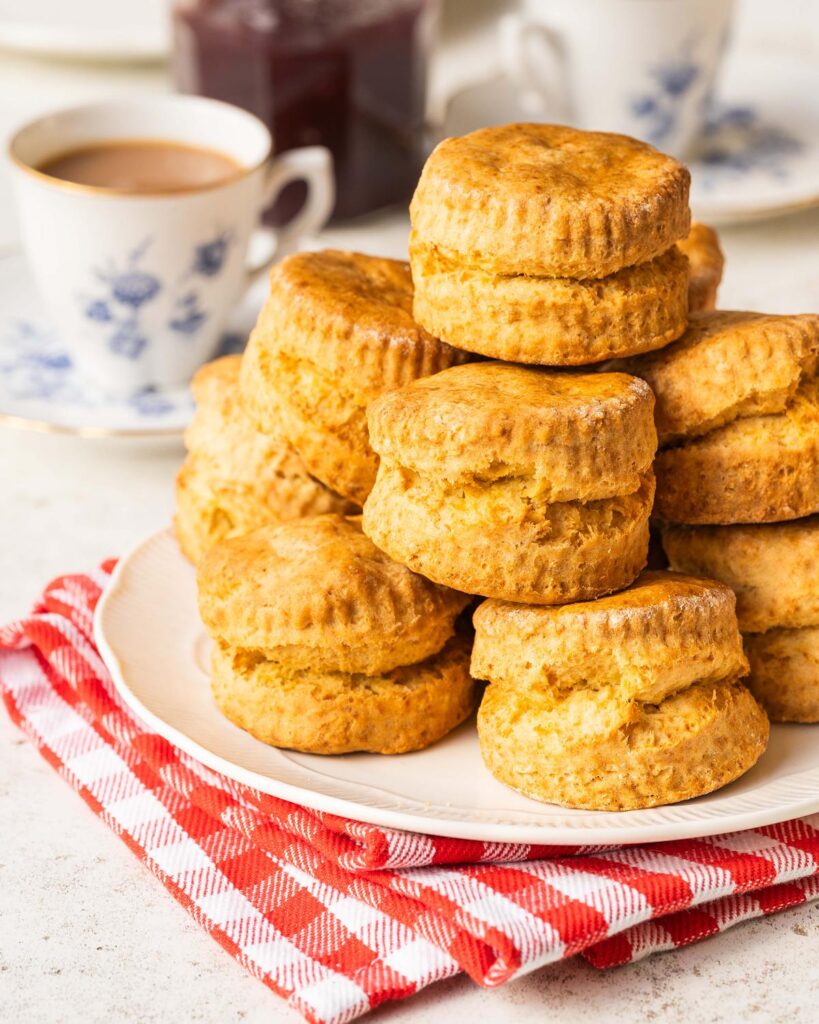
Step 6: Place in the hot oven and bake for 17-20 minutes, turning to brown evenly for the last couple of minutes if needed. Cool for a minute on the tray, then transfer to a wire rack to cool. Enjoy!
How to store buttermilk scones
Store your scones with buttermilk in an airtight container away from direct sunlight. Scones are best when freshly baked on the day they are made. I would definitely recommend consuming them within a day or two of making for them to be at their best.
How to freeze scones
To freeze these fluffy scones with buttermilk, first ensure they are thoroughly cool from baking. You can freeze them simply in an airtight and freezer safe container for up to a month. I like to wrap mine individually in cling film and a bit of foil to ensure they don’t also absorb any smells of other foods in the freezer.
How to serve scones
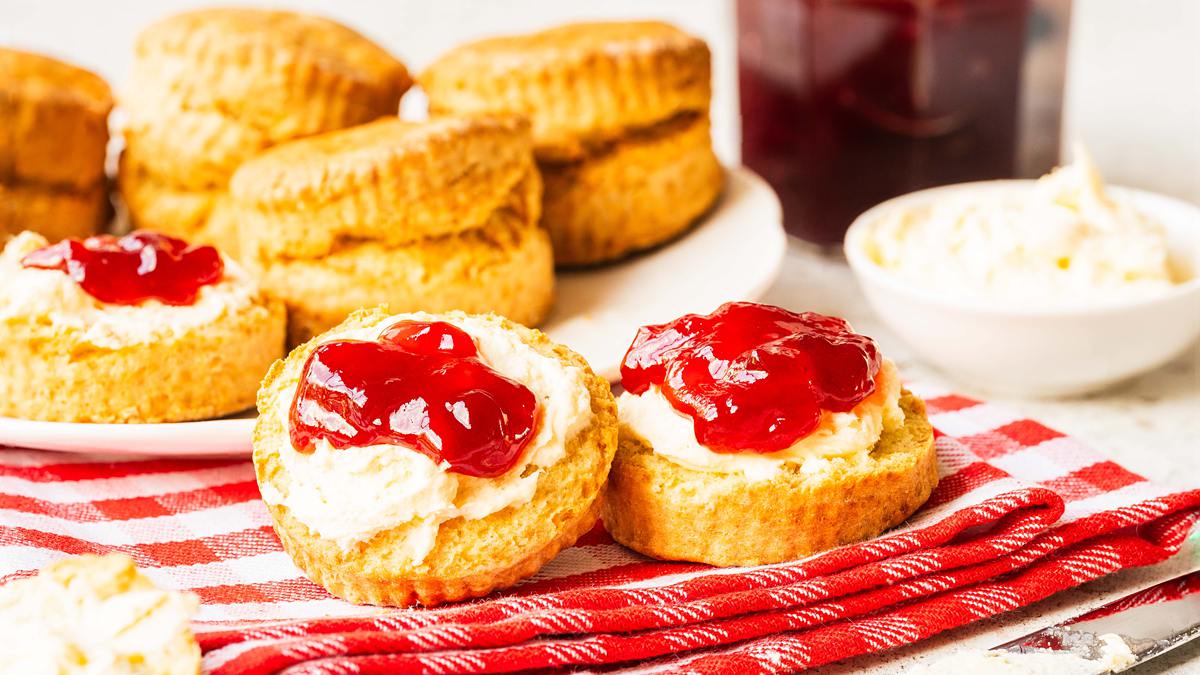
My eggless scones can be served a few different ways, depending on your preference! You could enjoy them fresh and warm from the oven, with some salted butter or your preferred spread. Alternatively, a traditionally British way is to serve jam scones and clotted cream as part of an afternoon tea.
The only question that now remains unanswered is this: do you slather on the jam first or cream first?
Scones recipes variations
This recipe buttermilk scones is so good just on its own, but actually is brilliant for its adaptability too! If you fancy trying out some variations, why not explore these ideas:
- Lemon and blueberry. Rub the zest of one lemon into the dough when making. Gently fold through some fresh blueberries before stamping out.
- Raspberry and white chocolate. Fold some fresh or frozen raspberries and white chocolate chips through this buttermilk scones recipe before stamping out to bake.
- Orange and chocolate. Add in the zest of an orange and fold through some chocolate chips before baking the scones buttermilk.
Tips to make perfect scones
- When mixing the wet and dry together to make the dough, you want it to be soft and slightly sticky but not soggy. Add a little more milk if it is too dry, or a little more flour if too wet and sticky.
- The dough should not be completely mixed and smooth, but more of a shaggy dough, when tipped out. This allows the last bit of the dough to be brought together and not overworked.
- No need for a rolling pin to flatten the dough: simply using your fingers to even out the dough is perfect!
- It is really important not to twist the cutter when stamping out the scones. Twisting the cutter seals the sides of the scone, hindering the rise and so the beautiful shape you can achieve. Straight down and back up again is perfect, and make sure to flour the cutter between each cut.
- Put the cut scones close together to bake if you prefer softer scones. Spacing them further apart will give more browned and crisper scones. It’s all about personal preference!
- When brushing with milk, be very careful to only brush the tops of the scones. If milk drips down the sides, it can hinder the rise of the scones, so you could end up with lopsided rising, but still delicious fluffy scones!
Troubleshooting
If you have any other questions about this fluffy scones recipe, please use the comments below and I will do my best to help. And if you do make this recipe for buttermilk scones, please dp leave a rating and review below. I would love to know how you enjoy it, plus it really helps others looking for a similar recipe too. You could even post a picture on Instagram and tag me when you share it with the world, you know I love seeing all your bakes!
More delicious British recipes for you to enjoy
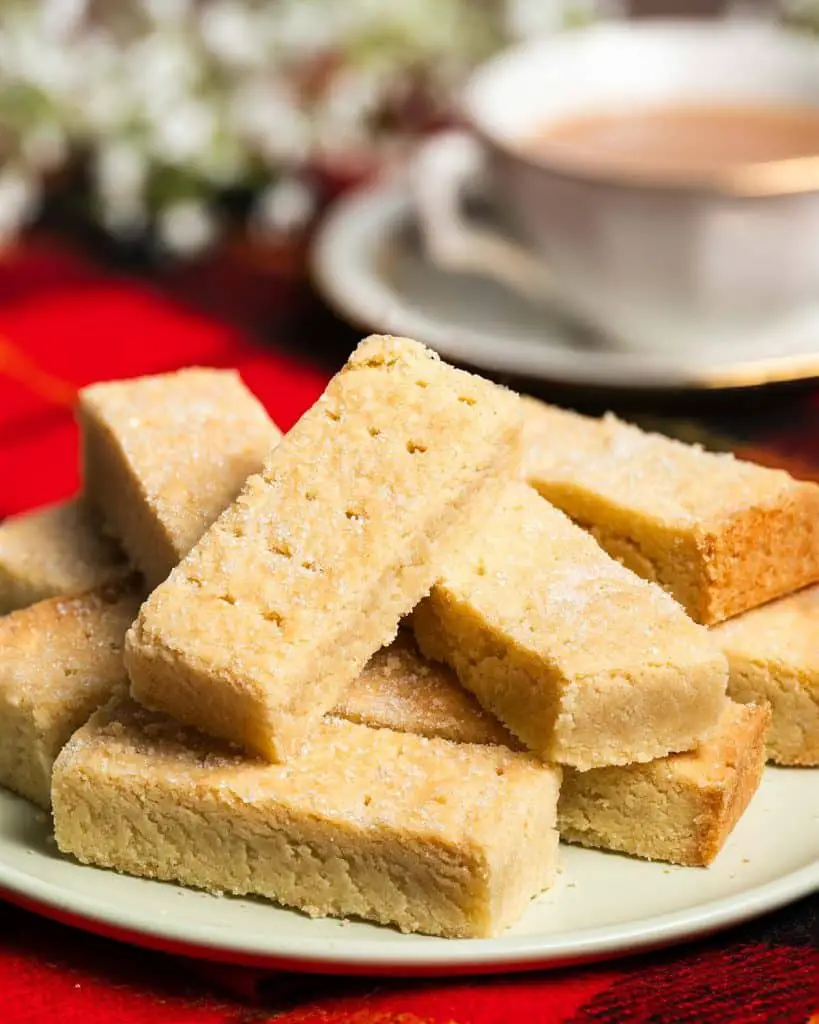
The BEST Scottish shortbread. This delicious Scottish shortbread recipe is one shared with me by a good friend passed down from her Scottish grandmother. It is hands down the best Scottish shortbread recipe you will ever try!
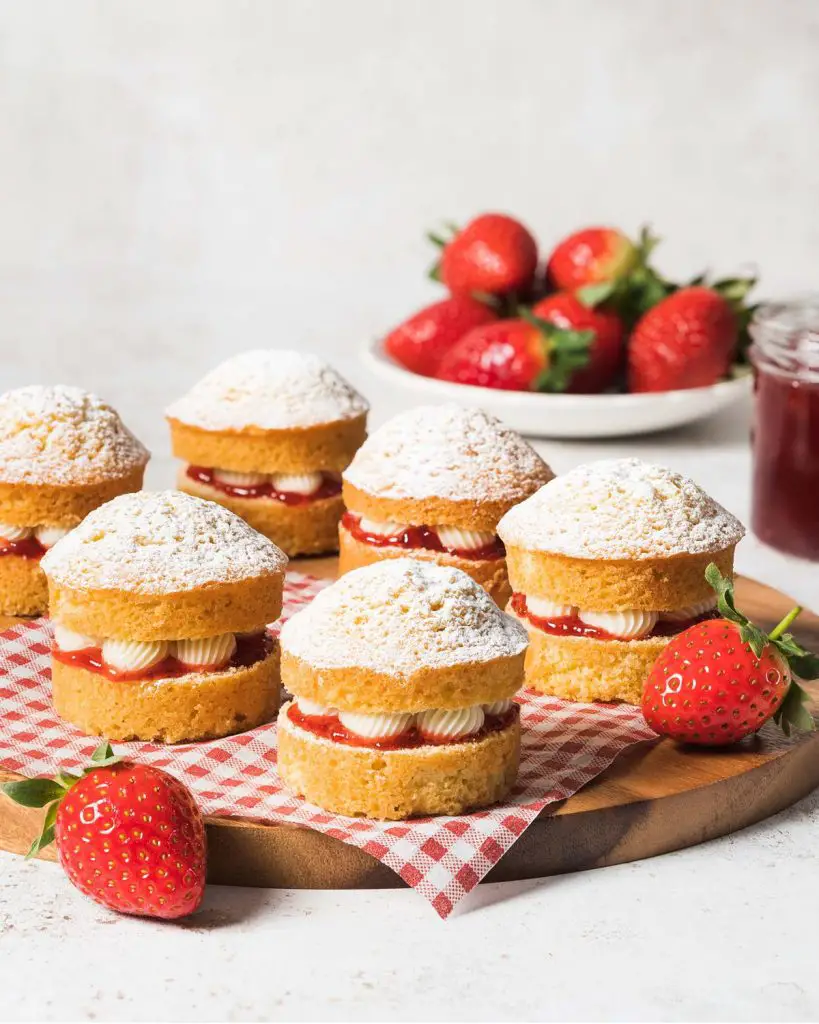
Mini Victoria sponge cakes. My mini Victoria sponge are a total winner every time! Light and fluffy vanilla mini cakes sandwiched with beautiful strawberry jam and delicious vanilla buttercream. They are so simple, but these Victoria sponge cup cakes are always enjoyed by everyone!
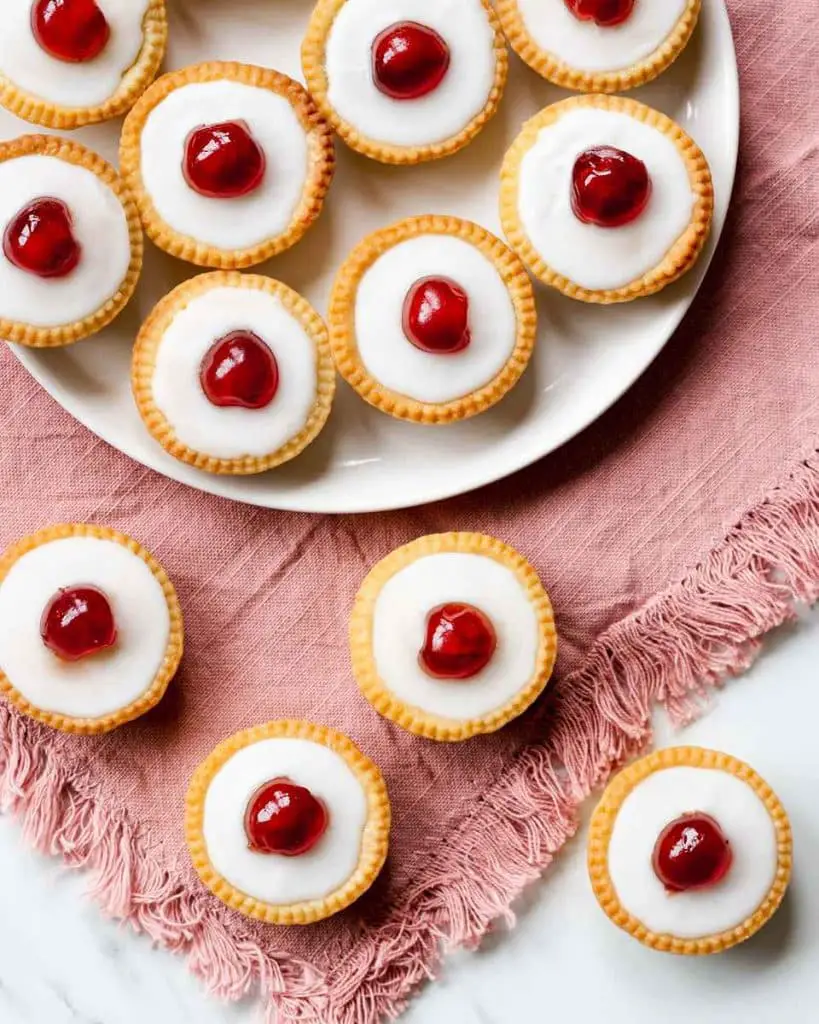
Mini cherry Bakewell tartlets. This mini Bakewell tarts recipe is the only one you will ever need for the perfect adorable bake. Beautiful buttery pastry, rich cherry jam, scrumptious almond frangipane. All topped with a layer of icing and, of course, the obligatory cherry on top!

The BEST classic Victoria sandwich recipe. A simple British classic, the Victoria sandwich has two layers of light and fluffy vanilla sponge cake filled with soft vanilla buttercream and tart raspberry jam. Finish with a dusting of icing (powdered) sugar for the ultimate tea time treat!
And that’s all from me for today! Hope you enjoy making this scones with buttermilk recipe as much as I enjoy sharing with you. Happy baking, my friends! x
Recommended equipment I used *
| Digital kitchen scales | Measuring spoons |
| Mixing bowl | Cutters |
| Baking tray | Pas try brush |
Classic Buttermilk Scones
Ingredients
- 250 g (1½ cups + 1 tbsp) plain (all-purpose) flour
- 1 tsp baking powder
- 0.5 tsp bicarbonate of soda (baking soda)
- 0.25 tsp salt
- 2 tbsp (generous) caster sugar
- 55 g (¼ cup) COLD unsalted butter, cubed
- 150 ml (½ cup + 1 tbsp) buttermilk
- milk, for brushing your scones before baking
Instructions
- Preheat the oven to 190C/375F. Line a baking tray with parchment paper and set aside.
- In a large bowl, sift together the flour, baking powder, bicarbonate of soda (baking soda), salt and sugar. Add in the cold cubed butter and rub in until the mixture resembles fine breadcrumbs.
- Pour in the buttermilk and gently mix until the dough just comes together into a shaggy dough.
- Tip the dough out onto a lightly floured surface. DO NOT KNEAD! Instead, just push everything together into one large shape, then flatten with your hands until about an inch thick. Using a floured cutter tool, press it into the dough, stamping out as many shapes as you can. Squeeze the dough back together, then flatten again and repeat to use up the rest the dough.
- Place the cut out scones onto the prepared baking tray, placing them fairly close together but not touching. Carefully brush the tops only of each scone with a little milk before baking.
- Place in the hot oven and bake for 17-20 minutes, turning to brown evenly for the last couple of minutes if needed. Cool for a minute on the tray, then transfer to a wire rack to cool. Enjoy!