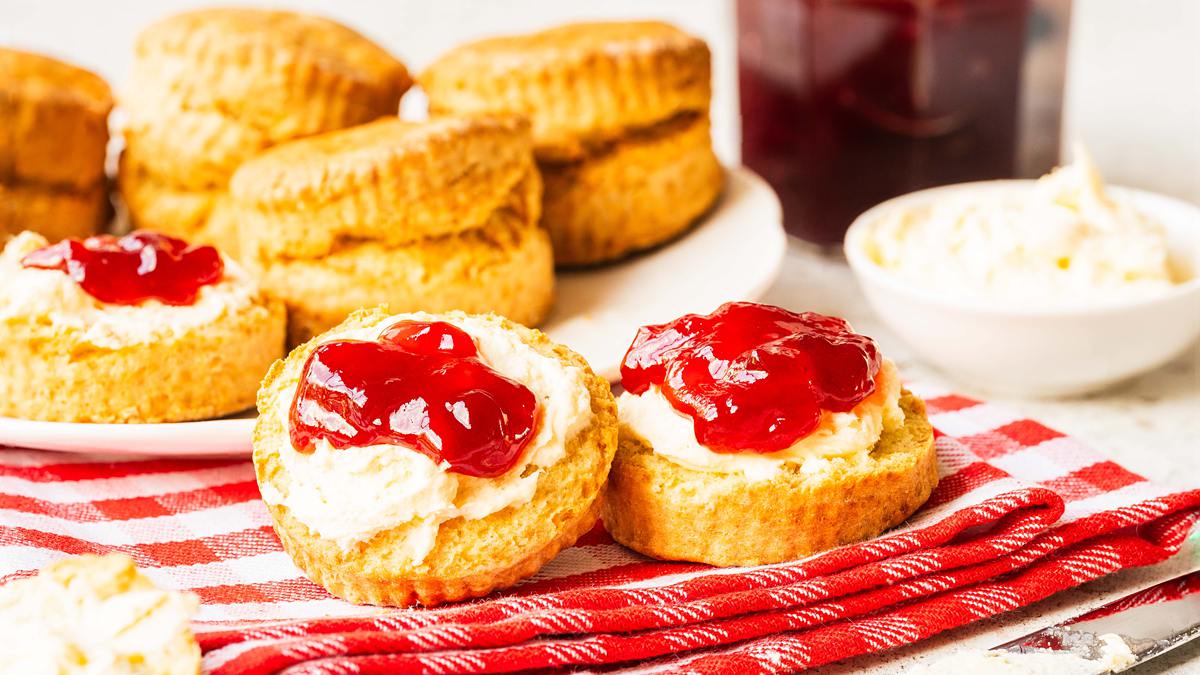
Classic Buttermilk Scones
My classic buttermilk scones that are light, fluffy, and naturally eggless. This traditional British scone recipe uses buttermilk for an extra tender texture, making them the ultimate addition to your afternoon tea served with clotted cream and jam.
Ingredients
- 250 g (1½ cups + 1 tbsp) plain (all-purpose) flour
- 1 tsp baking powder
- 0.5 tsp bicarbonate of soda (baking soda)
- 0.25 tsp salt
- 2 tbsp (generous) caster sugar
- 55 g (¼ cup) COLD unsalted butter, cubed
- 150 ml (½ cup + 1 tbsp) buttermilk
- milk, for brushing your scones before baking
Instructions
- Preheat the oven to 190C/375F. Line a baking tray with parchment paper and set aside.
- In a large bowl, sift together the flour, baking powder, bicarbonate of soda (baking soda), salt and sugar. Add in the cold cubed butter and rub in until the mixture resembles fine breadcrumbs.
- Pour in the buttermilk and gently mix until the dough just comes together into a shaggy dough.
- Tip the dough out onto a lightly floured surface. DO NOT KNEAD! Instead, just push everything together into one large shape, then flatten with your hands until about an inch thick. Using a floured cutter tool, press it into the dough, stamping out as many shapes as you can. Squeeze the dough back together, then flatten again and repeat to use up the rest the dough.
- Place the cut out scones onto the prepared baking tray, placing them fairly close together but not touching. Carefully brush the tops only of each scone with a little milk before baking.
- Place in the hot oven and bake for 17-20 minutes, turning to brown evenly for the last couple of minutes if needed. Cool for a minute on the tray, then transfer to a wire rack to cool. Enjoy!
Notes
Nutrition
Calories: 159kcal