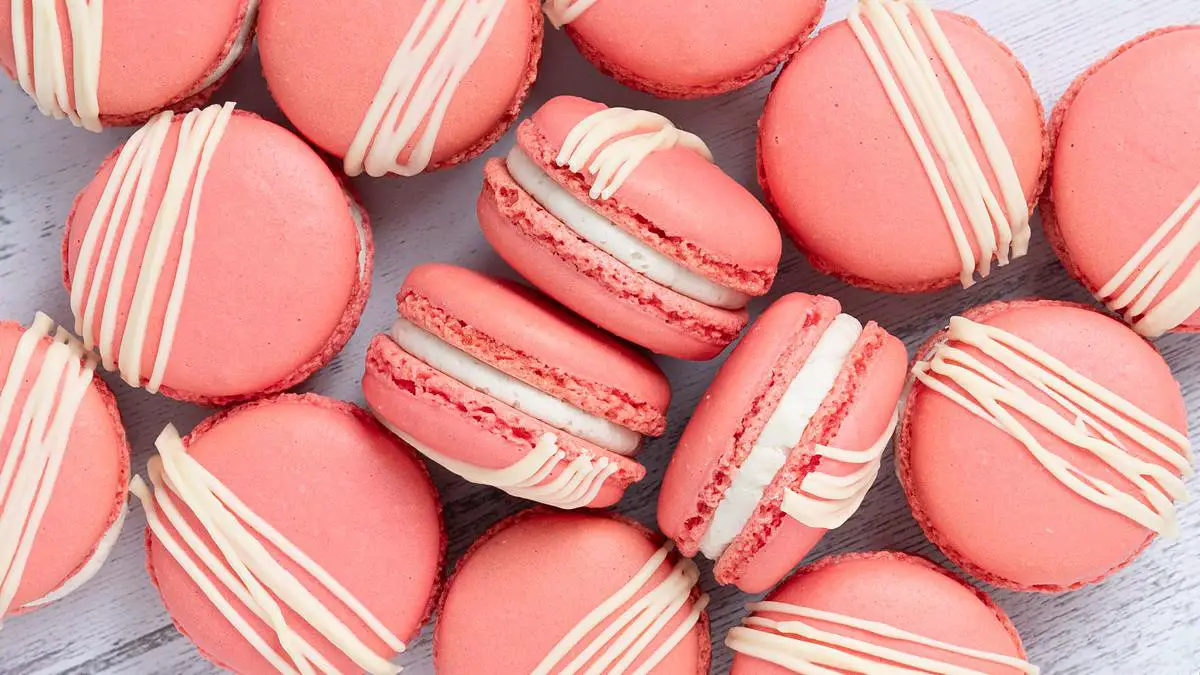
Strawberry Macarons
Pretty pink macarons filled with strawberry jam and a smooth vanilla buttercream. Heavenly!
Ingredients
For the macaron shells
- 100 g (½ cup + 2 tbsp) ground almonds
- 100 g (¾ cup) icing sugar
- 65 g egg whites
- 0.25 tsp lemon juice
- 60 g (¼ cup + 1 tbsp) caster sugar
- pink food colouring
For the filling and decoration
- 150 g (½ cup + 3 tbsp) unsalted butter, softened
- 300 g (2 ¼ cups) icing sugar
- 1 tsp vanilla
- 1 tbsp double cream
- 8 tsp strawberry jam
- white chocolate, melted
Instructions
For the macaron shells
- Place the baking mats on two baking trays. Set aside whilst making the macarons.
- Using a food processor, pulse the ground almond and icing sugar until it is really fine and no lumps remain. I do this in a couple of batches to avoid it clumping together. Once blitzed, sift the mixture twice into a mixing bowl. Discard any larger bits that remain. Set the bowl aside. TIP: DO NOT try to push any leftover mixture through the sieve. You want this dry mixture to be really fine and well aerated.
- In a separate bowl, or using a stand mixer with a whisk attachment, whisk up the egg whites with the lemon juice until foamy. Turn the speed to a medium-low and add in the caster sugar one tablespoon at a time, waiting a few seconds between additions. Once all the sugar has been added, the mixture will be soft and pillowy. Add in the food colouring and mix to combine. TIP: Add in more food colouring than you think. Once the egg whites are whipped to stiff peaks and the sifted dry ingredients are added, the colour will be diluted. Add more colour at this stage, to allow for it to pale once ready.
- Turn the mixer speed up to medium-high and whisk until the egg white mixture reaches stiff peaks, about 4-5 minutes. TIP: The egg whites will give you visual clues when they are reaching stiff peaks. First, you will see the mixture forming a larger ball in the middle of the whisk during mixing, like it is clumping together. When you think it is done, remove the whisk and hold it pointing up: the egg white mixture should remain stiff and pointing towards the ceiling, without the tip flopping over. If this happens, whisk it for a minute or so longer and test again. The final test (for the really brave!) is to turn the whole bowl upside down. If the mixture has reached stiff peaks, it will not budge. However, it risks a messy splat on your floor!
- Carefully add in half the sifted almond mixture. Gently fold the two together with a spatula. When almost combined, add in the rest of the almond mix and fold gently again. Make sure to scrape the bottom of the bowl so everything is mixed together. TIP: At this stage, until everything is combined, you want to mix everything together well but without losing too much of the air beaten into the egg whites. Once combined, this mixture will be lumpy, even if it looks well combined. No need to worry, the next step will fix this.
- This next step is called macaronage. It is where we keep folding the mixture until it achieves the texture and consistency required for the best macaron shells. You are looking for the mixture to become smooth and more glossy. When you lift the spatula, it should form a V shape as it falls back into the bowl. It will be smooth but still stiff enough to not disappear completely when dripped back into the mixture. The consistency will be like slow moving lava, so still fairly thick. When ready, transfer to a piping bag fitted with a round nozzle. TIP: You can do the slower more gentle method of this step by folding and turning your bowl a quarter turn, then repeating. If you want a quicker way (which is not without risk), you can gently press the mixture up the sides of the bowl, then fold it all back together, checking the consistency each time. This way is quicker, but it is very easy to be over zealous and over mix, resulting in deflated or hollow macaron shells once baked.
- Holding the piping bag facing straight down, pipe rounds of the macaron mixture using the circles on the mat as a guide. Once one tray is piped, drop the tray from a few inches off the table a couple of times. This helps any trapped air bubbles come to the surface of the piped shells. Use a toothpick or skewer to pop the air bubbles and smooth out the top of the shells. Leave the mixture on the table to form a light skin on top. This can take anything from twenty minutes to an hour, depending on the temperature and humidity of the room. TIP: To test if the skin has formed and the shells are ready to be baked, the first clue will be visual: the shells will look dull on top. If this is the case, very VERY gently run a finger across the top of a shell. It should not stick to your finger at all, but be smooth and dry to touch. The shells are now ready to be baked!
- Preheat the oven to 160C/320F. Bake the dried shells on the preheated oven for 20 minutes until baked through. Leave to cool completely on the tray. TIP: You can check if the macaron shells are baked through by gently pushing the side of one of the shells. If it moves, even a little, bake it for an additional two minutes and check again. When baked through, the shells will not move at all when pushed, and will have grown beautiful "feet" in the oven.
For the filling and decoration
- Beat the butter until pale and fluffy. This takes me about 3-4 minutes. Add in half the icing sugar, beating on low to combine thoroughly. Add in the vanilla and mix through, then tip in the remaining sugar and beat again on low. If the buttercream is a little stiff, add in enough cream for it to be soft and spreadable. Turn the speed up and beat the buttercream until fluffy, then transfer to a piping bag fitted with a small round nozzle. Set aside.
- Stir the jam to loosen it a little, then place into a second piping bag and cut a small hole at the end. Set aside
- Melt the white chocolate and drizzle a little over half the macaron shells. Once done, release the shells from the mat.
How to assemble strawberry macarons
- Take an undecorated macaron shell and pipe a ring of buttercream a little in from the edge on the flat side of the shell. This will be the bottom of the macaron, and the lower shell.
- Fill the middle of the buttercream ring with some jam, being careful not to overfill so it does not sit higher than the buttercream ring "dam".
- Top the filling with a decorated macaron shell. Gently and evenly press the shells together to spread the filling to the edge all the way around. Chill the macarons for 24 hours before serving. Enjoy!
Video
Notes
- When sifting the ground almonds and icing sugar together, DO NOT try to push any leftover mixture through the sieve. You want this dry mixture to be really fine and well aerated.
- Add in more food colouring than you think you will need into the egg white mixture. Once the egg whites are whipped to stiff peaks and the sifted dry ingredients are added, the colour will be diluted. Adding more colour at this stage, will allow for it to lighten once it is baked but still hold its colour.
- Wondering how to tell if the egg whites have reached stiff peaks? They will give you visual clues when they are reaching this stage. First, you will see the mixture forming a larger ball in the middle of the whisk during mixing, like it is clumping together. When you think it is ready, remove the whisk and hold it pointing up: the egg white mixture should remain stiff and pointing towards the ceiling, without the tip flopping over. If it does flop over, whisk it for a minute or so longer and test again. The final test (for those who are really brave!) is to turn the whole bowl upside down over your head. If the mixture has reached stiff peaks, it will not budge. However, it risks a messy splat on your floor!
- When adding in the dry ingredients to the egg white mixture, you want to mix everything together well but without losing too much of the air beaten into the egg whites. Once totally incorporated together, the mixture will still be lumpy, even if it looks well combined. No need to worry, the next step of macaronage will fix this.
- Macaronage: you can do the slower more gentle method of this step by folding and turning your bowl a quarter turn, then repeating. If you want a quicker way (which is not without risk), you can gently press the mixture up the sides of the bowl, then carefully fold it all back together, checking the consistency each time. This way is quicker, but it is very easy to be over zealous and so over mix, resulting in deflated or hollow macaron shells once baked.
- Once they have been left to air dry, test if the skin has formed so the shells are ready to be baked. The first clue will be visual: the shells will look dull on top. If this is the case, very VERY gently run a finger across the top of a shell. It should not stick to your finger at all, but be smooth and dry to touch. The macaron shells are now ready to be baked!
- When baking, keep an eye on the baking shells through the oven door. Check if the macaron shells are baked through by gently pushing on the side of one of the shells. If it moves, even a little, bake it for an additional two minutes and check again. When baked through, the shells will not move at all when pushed, and will have grown beautiful "feet" in the oven.
- Use buttercream that is not too stiff for the strawberry macaron filling. If it is too firm, it could cause the shells to crack and break as you assemble together.
- Make sure the strawberry macaron filling jam level does not come above the level of the piped buttercream. If it does, you may end up with some jam oozing out and spoiling the look of the finished macarons.
- Chilling the macarons once assembled allows the flavours to blend and mature, and the macarons to soften slightly giving their signature chew. I stack mine in an airtight container and place in the fridge for 24 hours after they have been made before serving.
Nutrition
Calories: 249kcal