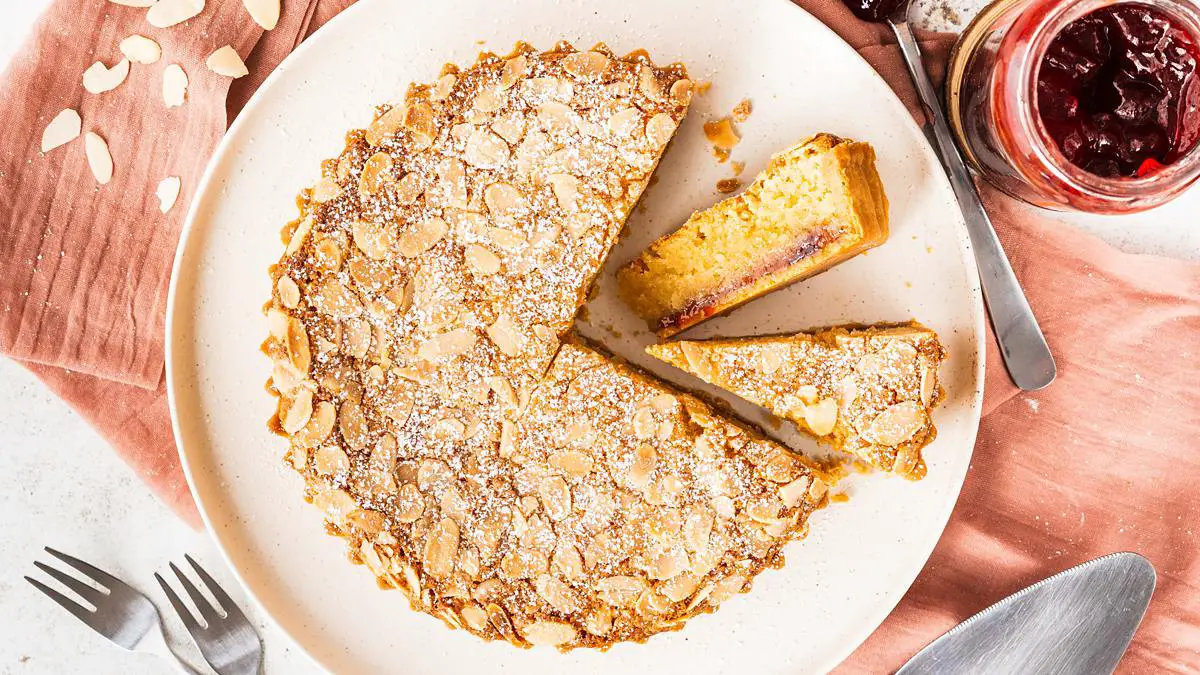
Traditional Bakewell Tart Recipe
Master the traditional Bakewell tart with this easy, fail-safe recipe. Featuring a crisp shortcrust pastry shell, a layer of tart raspberry jam, and a rich, golden almond frangipane, this classic British dessert is finished with flaked almonds for the ultimate teatime treat.
Ingredients
For the pastry
- 250 g (1½ cups + 1 tbsp) plain (all-purpose) flour
- 60 g (¼ cup + 3 tbsp) icing (powdered) sugar
- 125 g (½ cup + 1 tbsp) unsalted butter, cold and cubed
- 2 large eggs, yolks only
- 2-4 tbsp ice (ie very very cold!) water
For the frangipane, filling and decoration
- 150 g (½ cup + 3 tbsp) unsalted butter
- 150 g (¾ cup) golden caster sugar
- 2 large eggs
- 150 g (¾ cup + 3 tbsp) ground almonds
- 1 tbsp plain (all purpose) flour
- 1 tsp almond extract
- 150 g (½ cup) raspberry jam
- 1-2 tbsp flaked almonds
- icing (powdered) sugar, to dust
Instructions
For the pastry
- First make the pastry. In a food processor or a large mixing bowl, mix together the flour and sugar. Add in the cubes of cold butter and cut or blend in until the mixture resembles fine breadcrumbs. Ensure no large chunks of unblended butter remain or it will speckle the pastry when it is rolled out. Tip in the egg yolks and blend again until just combined. Add in the ice water a little at a time until the pastry comes together in clumps.
- Tip the dough out onto a clean work surface and gather it together. Squeeze to bring it together, but try to avoid kneading and working it too much or the pastry will be tough. Divide the pastry dough into two equal parts and flatten into discs. Wrap each disc tightly in cling film then pop in the fridge to chill for at least 30 minutes. At this point, you can freeze the dough for another day, if you wish.
- Once the dough is made and has chilled, roll out the chilled pastry to a circle about 2" larger than an 8" tart tin. Fold it carefully over the rolling pin and lift it into the tin. Ease the pastry into the edges. Do not stretch the pastry to make it fit. After lining the tin with pastry, gently fold the overhang of pastry over the tip of the tin. Using the rolling pin, roll over the top of the tin to cut off excess pastry. Prick several holes in the bottom of the pastry, then pop in the fridge to chill for a further 30 minutes.
For the frangipane
- Whilst the dough is getting its second chill, make the frangipane. In a mixing bowl, soften the butter, then add in sugar, ground almonds, egg and almond essence. Beat all the ingredients together until completely combined. The mixture will be thick, this is perfect. Transfer to a small piping bag, for ease if using, then set it aside.
- In a small separate bowl, place the jam and stir to loosen, adding a little water if needed. This is an optional step, but can make it a little easier to spread the jam into the pastry case if needed.
To bring the Bakewell tart together
- Time to get baking! First, preheat the oven to 160C/320F. Prepare a piece of parchment paper large enough to fit inside the pastry shell with some overhang. Scrunch it up, then open it again, so that it is malleable. Remove the tin from the fridge and press the paper into the shell, easing into the corners. Fill with baking beans (see notes), then once the oven has reached temperature pop the tin in the oven. Bake blind for 20 minutes, then remove the paper and baking beans and bake a further 10 minutes until golden and biscuity. Remove from the oven and place on a wire rack.
- Place the jam at the bottom of the pastry shell, spreading almost to the edges. Pipe on the frangipane, filling it near the top, but no higher than the pastry edge. Using an offset spatula or a knife, gently ease the frangipane all the way to the edge of the pastry case, sealing the jam at the bottom. This is an important detail to avoid your jam bubbling up and bursting through the frangipane, making for a messy tart. Sprinkle the top of the tart with flaked almonds.
- Bake the bakewell tart for 45-50 minutes until the pastry edge is golden and the filling is only JUST set. Remove from the oven and leave in the tin to cool completely.
- The tart is good to be served as it, but I like to dust it with a little icing (powdered) sugar to finish the top. Enjoy!
Notes
Nutrition
Calories: 359kcal